
LCA vs. PCF :
Unterschied, Anwendung und Bedeutung
Was unterscheidet LCA und PCF? Ein klarer Überblick über Methoden, Anwendungsfälle und Einsatzbereiche für CO₂ Analysen.
Gesamtwirkung vs. CO₂ Daten auf Produktebene
LCA zeigt die vollständigen Umweltauswirkungen, während PCF fokussierte CO₂e Daten für einzelne Produkte liefert, ideal für Scope 3, Dekarbonisierung und CSRD Reporting.
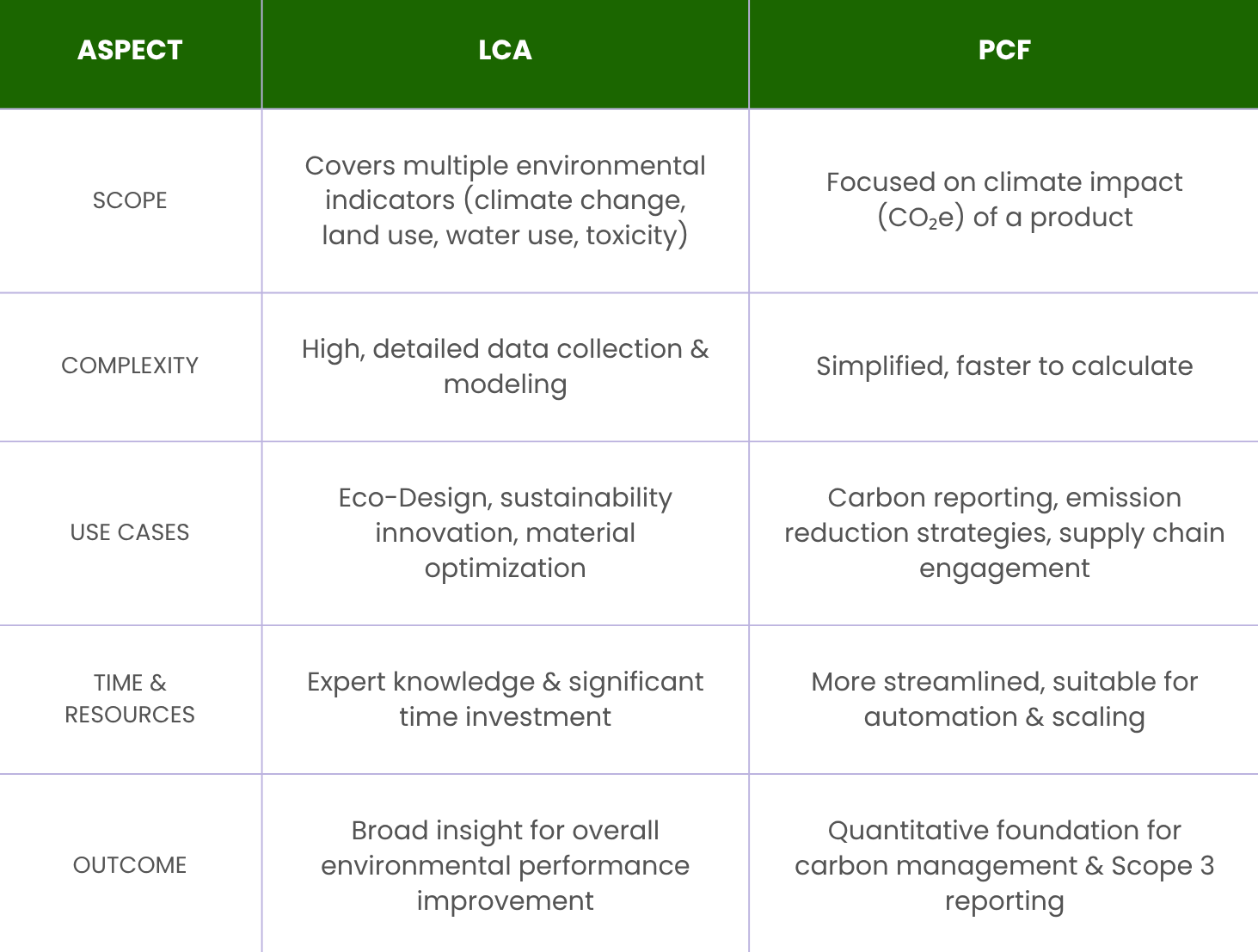
Im Kontext LCA vs. PCF analysiert eine Life Cycle Assessment (LCA) die Umweltauswirkungen eines Produkts oder einer Dienstleistung über den gesamten Lebenszyklus – von der Rohstoffgewinnung bis zur Entsorgung.
Sie umfasst verschiedene Umweltindikatoren wie Klimawandel, Ressourcenverbrauch oder Auswirkungen auf Mensch und Umwelt.
PCF kann für unterschiedliche Lebenszyklusgrenzen berechnet werden:
- Cradle-to-gate: von der Rohstoffgewinnung bis zum Ende der Produktion.
- Cradle-to-grave: ber den gesamten Lebenszyklus, inklusive Nutzung und Entsorgung.
Ein Product Carbon Footprint (PCF) fokussiert sich auf die Klimawirkung eines Produkts, indem alle Treibhausgasemissionen über den gesamten Lebenszyklus hinweg quantifiziert werden.
Auf derselben methodischen Grundlage wie eine LCA, jedoch auf CO₂e-Emissionen begrenzt, erfasst und berechnet der PCF sowohl potenzielle als auch tatsächliche Emissionen entlang des gesamten Lebenszyklus – von der Herstellung über die Nutzung bis zur Entsorgung – und ermöglicht so eine präzise, klimafokussierte Bewertung des Produktfußabdrucks.
Life Cycle Assessment (LCA) bietet im Vergleich eine ganzheitliche Betrachtung der Nachhaltigkeit und berücksichtigt verschiedene Umweltindikatoren über den gesamten Produktlebenszyklus hinweg.
Ein Product Carbon Footprint (PCF) hingegen fokussiert sich gezielt auf die CO₂e-Emissionen eines Produkts oder Materials und liefert eine klare Kennzahl für CO₂-Reporting, Scope-3-Berechnungen und CSRD-Konformität.
Beide Methoden basieren auf hochwertigen Emissionsdaten, um präzise und verlässliche Ergebnisse zu gewährleisten.
Verlässliche PCF Berechnungen
Mit hochwertigen CO₂e Daten für genaue und skalierbare Berechnungen.

.png)
Klare CO₂ Bewertung auf Produktebene
PCF liefert eine einfache und fokussierte Analyse der CO₂e Emissionen eines Produkts, mit geringerer Komplexität als eine LCA. PCF unterstützt Unternehmen dabei, regulatorische Anforderungen wie CSRD und CBAM zu erfüllen und Emissionen gezielt zu reduzieren.

Ganzheitliche Umweltanalyse mit LCA
LCA bietet eine umfassende Bewertung der Umweltauswirkungen über relevante Kategorien wie Klimawandel, Landnutzung und Ressourcenverbrauch. LCA ermöglicht detailliertes Benchmarking und die Identifikation von Umwelt-Hotspots.

Automatisierte Integration
Sustamize integriert CO₂ Daten direkt in ERP-, PLM- oder Reporting-Systeme. So wird manueller Aufwand reduziert und eine konsistente Datennutzung über alle Abteilungen und Prozesse hinweg sichergestellt.
.png)
Skalierbare PCF Lösungen
Von einzelnen Product Carbon Footprints bis hin zu globalen Lieferkettenanalysen unterstützt sustamize dabei, Nachhaltigkeit operativ umzusetzen, Reporting zu beschleunigen und Dekarbonisierung voranzutreiben.
.png)
Compliance einfach umsetzen
Mit verlässlichen CO₂e Daten lassen sich Anforderungen wie CSRD, CBAM und Scope 3 sicher erfüllen. Gleichzeitig wird der Reporting-Aufwand reduziert und die Datenqualität sowie Vergleichbarkeit deutlich verbessert.
.png)
Verifizierte Datenqualität
Alle Emissionsfaktoren sind im Einklang mit ISO 14067 und dem GHG Protocol. Die Daten werden zweimal jährlich geprüft, validiert und aktualisiert, um maximale Genauigkeit und Transparenz sicherzustellen.
Entdecken Sie die Lösungen von sustamize
Nachhaltigkeitsdaten in messbaren Mehrwert verwandeln
Vom Scope bis zur Umsetzung, für fundierte Nachhaltigkeitsentscheidungen und echten Business Impact.
Fragen zu LCA vs. PCF?
Alles Wichtige, um LCA Erkenntnisse in konkrete, entscheidungsrelevante PCF Daten zu übersetzen.
LCA vs. PCF: Welche Methode passt?
• PCF wählen, um CO₂e Emissionen auf Produktebene schnell und effizient zu messen und zu steuern.
• LCA wählen, um über CO₂ hinauszugehen und umfassende Umweltauswirkungen zu analysieren, sobald die Datenbasis vorhanden ist.
Mit den Datenlösungen von sustamize lässt sich einfach mit PCF starten und Schritt für Schritt zu ganzheitlichen LCA Analysen skalieren.
Wie nutzt sustamize LCA- und PCF-Daten in der Praxis?
Sustamize macht Product Carbon Footprints (PCF) für den täglichen Einsatz im Unternehmen zugänglich, skalierbar und zuverlässig. Während LCA die methodische Grundlage bildet, übersetzt sustamize diese komplexen Standards in automatisierte PCF Berechnungen auf Produktebene.
Warum sustamize?
Sustamize ermöglicht Unternehmen, Vertrauen in ihre CO₂ Daten aufzubauen, durch Automatisierung, verifizierte Emissionsfaktoren und nahtlose Integration. Komplexe Prozesse rund um LCA und PCF werden in klare, skalierbare Lösungen übersetzt, für effizientes CO₂ Management und transparente Scope-3-Analysen.
Welche Standards und Methoden werden für LCA verwendet?
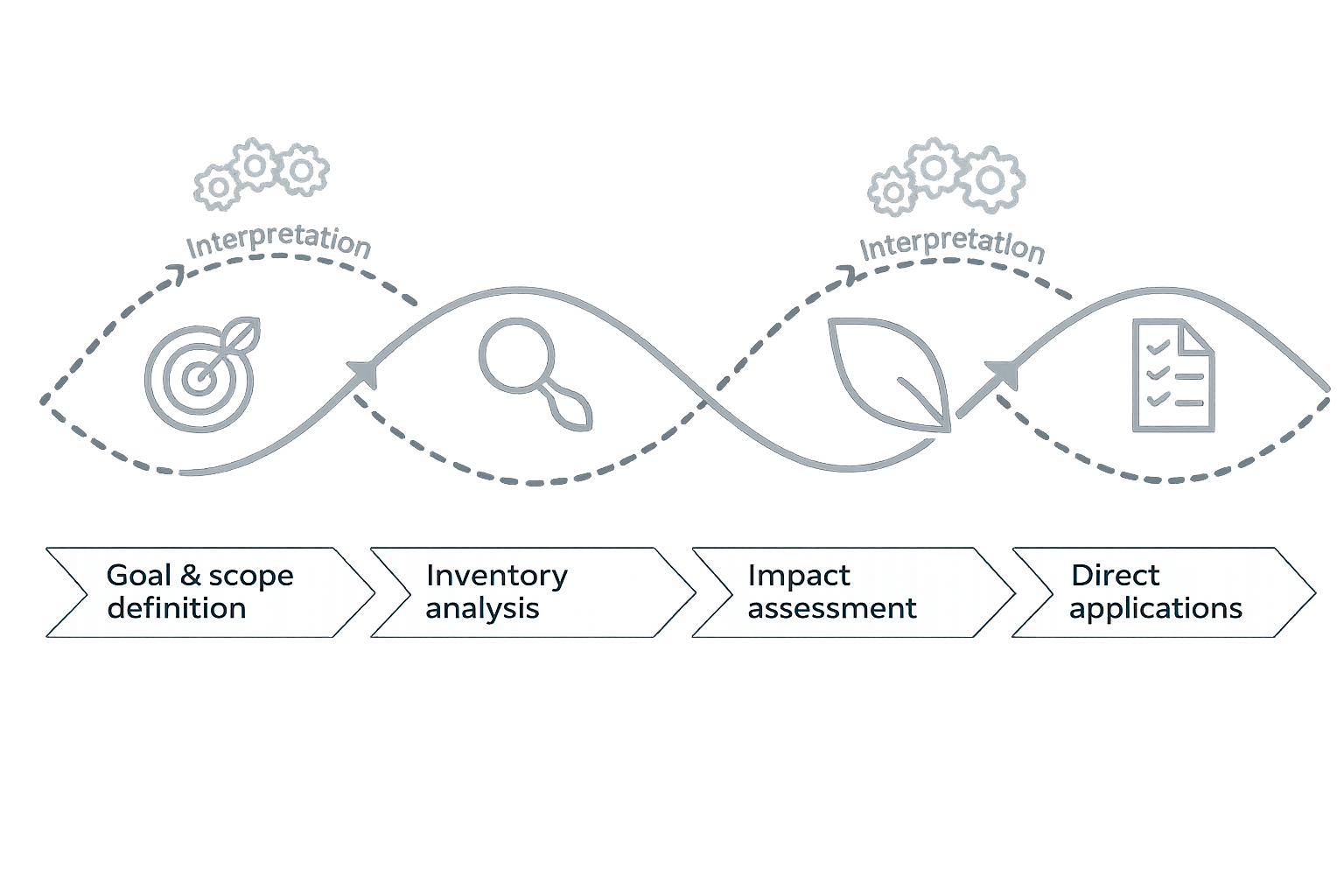
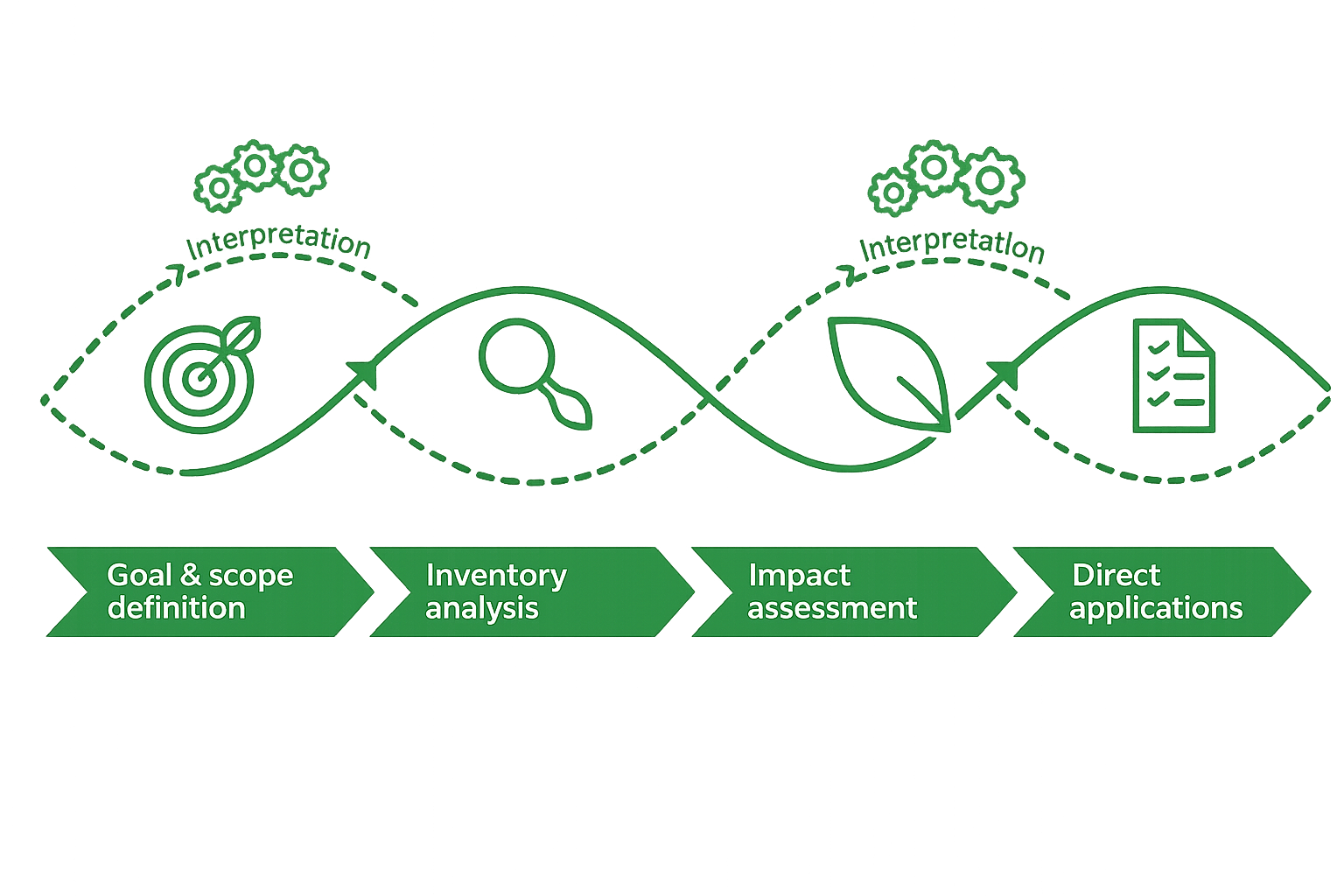
Life Cycle Assessments basieren auf international anerkannten Standards wie ISO 14040, ISO 14044 und PAS 2050. Die Methodik folgt einem strukturierten Vier-Phasen-Ansatz: Ziel- und Scope-Definition, Sachbilanz, Wirkungsabschätzung und Interpretation, für konsistente, transparente und vergleichbare Ergebnisse.
Welche Standards und Methoden werden für PCF verwendet?
Product Carbon Footprints basieren auf derselben methodischen Grundlage wie LCAs, fokussieren sich jedoch ausschließlich auf klimarelevante Treibhausgasemissionen. PCFs sind ausgerichtet an Standards wie ISO 14040, ISO 14044, ISO 14067, dem GHG Protocol Product Standard und PAS 2050.
Dieser standardisierte Ansatz ermöglicht konsistentes CO₂ Reporting und vergleichbare CO₂e Daten über Produkte und Lieferketten hinweg.
Kennen Sie den CO₂-Fußabdruck Ihrer Produkte?
Die Berechnung des Product Carbon Footprint (PCF) ist entscheidend für transparente, regelkonforme und datenbasierte Nachhaltigkeitsstrategien. Mit präzisen Daten auf Produktebene lassen sich fundierte Entscheidungen treffen, Emissionen gezielt reduzieren und der CO₂-Fußabdruck glaubwürdig kommunizieren.
Kennen Sie die Life Cycle Assessment (LCA) Ihrer Produkte?
LCA liefert entscheidende Einblicke in die Umweltauswirkungen entlang des gesamten Produktlebenszyklus – von der Rohstoffgewinnung bis zum End-of-Life. Mit präzisen und transparenten LCA-Daten können Unternehmen nicht nur Nachhaltigkeits- und Scope-3-Anforderungen erfüllen, sondern ihre Produkte gezielt für eine bessere Umweltperformance optimieren.
Wie unterstützt sustamize bei der Skalierung von PCFs?
Sustamize schließt die Lücke zwischen LCA und PCF, indem komplexe Nachhaltigkeitsdaten in automatisierte Analysen auf Produktebene übersetzt werden.
Mit Zugriff auf über 7 Millionen verifizierte Emissionsfaktoren ermöglicht die Plattform präzise CO₂e Berechnungen, effizientes Scope-3-Reporting und skalierbares CO₂ Management.
Emissionen senken,
Kosten optimieren
CO₂e-Daten nutzen, um Product Carbon Footprints entlang der Wertschöpfungskette effizient zu berechnen und zu optimieren.

©2026 sustamize | AGB | Datenschutz | Impressum.