
Recycling Quotas, Secondary Material Quotas... What Is the Right Terminology?
Secondary Materials, Recycling Quotas and Scrap: Key Terms Explained
Are you looking to reduce your Product Carbon Footprint (PCF) by increasing the share of secondary materials in your products? Then understanding the terminology is essential.
Terms such as secondary material, recycling quota, post-consumer scrap, and pre-consumer scrap are often used interchangeably, although they describe different concepts. Knowing these differences helps companies make informed material choices, improve circularity, and meet sustainability targets.
Below, we've summarized the most important terms related to recycling, secondary materials, and circular manufacturing.
Primary Material vs. Secondary Material
Primary material: Unprocessed virgin raw material that has not yet been processed, shaped, or altered in any way before it is used to make the final product. Example: iron ore is a naturally occurring mineral that contains the iron metal compound, which is mined and then used as a primary material to produce steel.
Secondary material: Material that has already been used in the manufacturing process and can be recovered. The secondary material has been collected and processed specifically for the purpose of being reused in the manufacturing process. For example, aluminum cans that have been collected and processed for recycling into new aluminum products are considered secondary materials.
What Is Scrap?
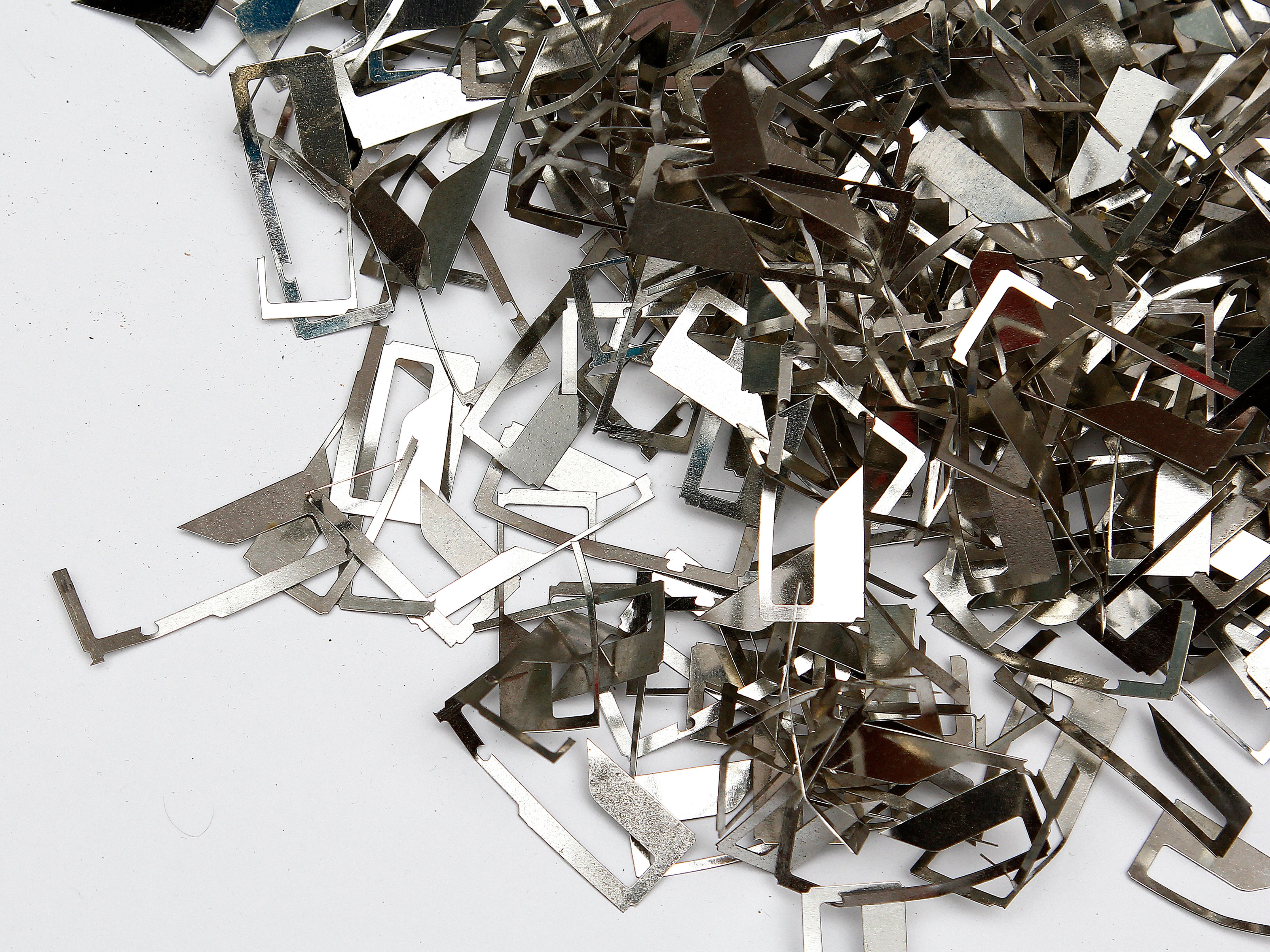
Scrap: Waste materials left over from the manufacturing process that are no longer useful for their original purpose. As soon as scrap is reused in the product’s system, it becomes secondary material. Scrap is often sold to scrap dealers who specialize in recycling or disposal.
Recycling: Overall process (mechanical and chemical) of converting waste or material scrap into reusable material. This definition can be applied to any kind of material or product.
Circular scrap: Materials that have reached the end of their original life cycle but can be reused in new ways. Circular scrap differs from conventional scrap by being deliberately designed for reuse, rather than being leftover material. For example, filler metal casting which is typically melted and used again in the casting.
Process / Pre-Consumer / Industrial scrap: Unused material that cannot be reused in the same manufacturing process chain and must be transported to a previous system of materials supply chain for recycling (e.g., chips from milling metal material).
Post-consumer scrap: Waste materials that are generated at the end of a product's life cycle. These scraps usually consist of a mix of various materials. Recycling post-consumer scrap can be challenging due to economic and/ or technological limitations. However, with appropriate sorting and purification, it can be reintegrated into the material’s supply chain for reuse.
Waste scrap: Materials that do not have a direct purpose and cannot be readily used in recycling processes. Typically, this type of scrap is disposed of in landfills, as it cannot be effectively recycled for further use.
What Is Recycling?
Recycling quota vs. secondary material quota: Often the terms are communicated as synonyms, which is not correct. The distinction between recycling quota and secondary material quota lies in the processing requirements of how the waste is introduced to a former or same process step. Secondary material refers to waste that can be directly reintroduced into a previous or same process step without additional processing. On the other hand, recycling involves “processing of waste” before its reintroduction. For instance, scrap from circular processes, where circular scrap is reused within the system (such as e.g., metal filler in casting), does not require processing before reuse, unlike recycling where materials are typically processed. As a result, quotas for secondary material differ from recycling quotas.
Why Secondary Materials Matter for Product Carbon Footprints
Increasing the share of secondary materials can significantly reduce the Product Carbon Footprint (PCF) of a product.
Compared to primary materials, recycled materials often require less energy and fewer raw resources, resulting in lower CO₂ emissions.
Using more secondary materials also supports:
- Circular Economy strategies
- Scope 3 emission reductions
- Sustainable product design
- Resource efficiency
- Climate targets and decarbonization initiatives
Frequently Asked Questions
What is the difference between primary and secondary materials?
Primary materials are virgin raw materials extracted from natural resources. Secondary materials have already been used and are recovered for reuse in manufacturing.
What is the difference between pre-consumer and post-consumer scrap?
Pre-consumer scrap is generated during manufacturing, whereas post-consumer scrap is generated after a product has been used and discarded.
Is scrap always recycled?
No. Some scrap can be reused directly within the production process, while other materials require recycling or cannot be reused at all.
What is the difference between recycling quota and secondary material quota?
A secondary material quota includes materials that can be directly reused without additional processing, whereas a recycling quota only includes materials that undergo a recycling process before reuse.
Learn More About Optimizing Product Carbon Footprints
Want to reduce the Product Carbon Footprint of your products by increasing the use of secondary materials?
Download our free whitepaper to learn how recycling strategies, high-quality carbon data, and reliable emission factors can help optimize your PCFs and support your sustainability goals.

14 Tage kostenlos testen
Entdecke unsere Emissionsdatenbank, KI-gestützten Tools und Lösungen für die Erstellung von Product Carbon Footprints.

.png)
Emissionen senken,
Kosten optimieren
CO₂e-Daten nutzen, um Product Carbon Footprints entlang der Wertschöpfungskette effizient zu berechnen und zu optimieren.


©2026 sustamize | AGB | Datenschutz | Impressum.