
Regulations & Carbon Transparency
Regulations such as CSRD, CBAM, ESPR and DPP require companies to measure product emissions and provide transparent carbon data.
From Regulatory Pressure to Carbon Transparency
With sustamize, companies can transform regulatory carbon reporting into actionable sustainability insights. By combining reliable CO₂e data with scalable PCF calculations, organizations can meet regulatory requirements, improve product transparency and accelerate decarbonization strategies.
Key Sustainability Regulations Affecting Product Carbon Data
Companies must prepare for a growing number of regulatory requirements related to carbon transparency.
Mandatory sustainability reporting across the EU.
The CSRD significantly expands sustainability reporting requirements for companies operating in the European Union. Organizations must disclose detailed environmental information, including Scope 1, 2 and Scope 3 emissions.
To support accurate reporting, companies increasingly need product-level emissions data and PCFs across their portfolios.

Carbon reporting requirements for imported goods.
The CBAM introduces carbon pricing for certain imported goods entering the EU. Importers must report the embedded emissions of products such as steel, aluminum, cement and fertilizers.
This makes accurate emissions data for materials, manufacturing processes and energy use essential for companies participating in global supply chains.
Product sustainability requirements across the EU market.
The ESPR aims to improve the environmental performance of products across their entire lifecycle. Companies must provide transparent information on product sustainability, including carbon emissions, materials and recyclability.
Product Carbon Footprints will play a central role in demonstrating compliance with ESPR requirements.

Digital transparency for product sustainability.
The DPP will require companies to provide structured sustainability data for products, including environmental impact, materials and lifecycle information.
Reliable product-level emissions data and standardized PCFs will form a critical part of these digital product records.
PPWR is reshaping packaging requirements.
The Packaging and Packaging Waste Regulation (PPWR) is a new EU regulation designed to reduce packaging waste and improve the sustainability of packaging across Europe. It introduces stricter requirements for recyclability, recycled content, labeling, and packaging design to support the transition toward a circular economy.
The Regulatory Pressure Is Accelerating
Move beyond high-level sustainability reporting and establish structured PCFs supported by high-quality emissions data.
Product-Level Carbon Data Is the New Standard

Growing Demand
Regulatory frameworks increasingly require product-level carbon data to understand the environmental impact of individual products across the value chain.
PCFs provide this transparency by quantifying emissions across materials, manufacturing processes, energy use and logistics.

Challenge for Companies
Many companies struggle to generate reliable emissions data across products and supply chains. Supplier emissions data is often incomplete, inconsistent or unavailable, making it difficult to calculate accurate Product Carbon Footprints.
Without structured CO₂e data and scalable calculation tools, preparing for regulatory reporting and carbon transparency becomes complex and resource-intensive.

The Need for Quality CO₂e Data
Calculating PCFs requires detailed emissions data across materials, manufacturing processes, energy inputs and logistics.
High-quality CO₂e data ensures consistent, transparent and comparable carbon calculations across products and supply chains.

The sustamize Solution
Sustamize enables companies to calculate Product Carbon Footprints using structured emissions data across materials, manufacturing processes, energy and logistics.
The platform combines extensive CO₂e reference databases with automated PCF calculation tools, enabling companies to generate regulation-ready emissions insights.
Enable Regulation-Ready Carbon Transparency
Sustamize provides the CO₂e data and PCF tools required to meet regulatory carbon requirements.
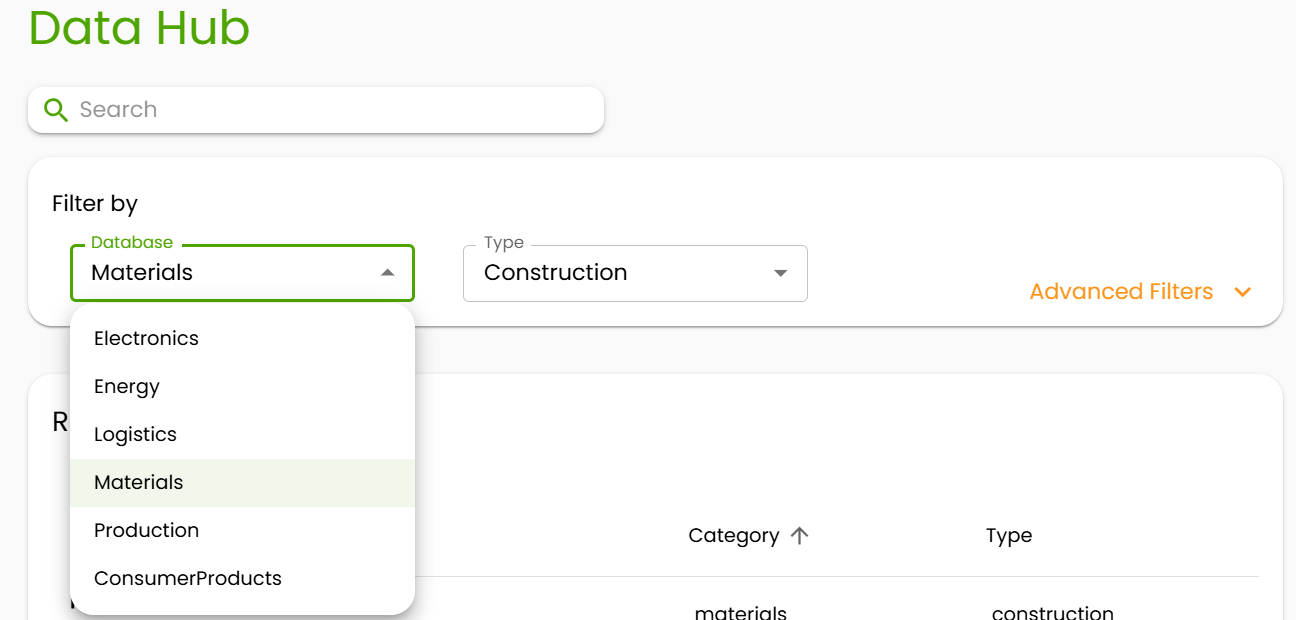
Access High-Quality CO₂e Reference Data
Build Reliable Product Carbon Footprints
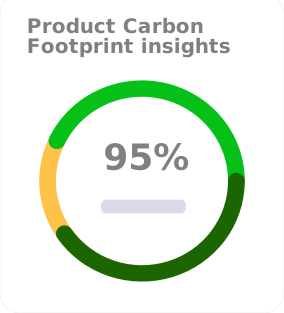
Support Regulatory Reporting
Regulatory Compliance & Carbon Data
Frequently Asked Questions
Understand how regulations such as CSRD, CBAM, ESPR and DPP impact your business and why PCFs and reliable CO₂e data are becoming essential for compliance and transparency.
Why are Product Carbon Footprints becoming mandatory for companies?
Product Carbon Footprints (PCFs) are increasingly required to comply with sustainability regulations such as CSRD, ESPR and Digital Product Passports. They quantify greenhouse gas emissions across a product’s life cycle and enable companies to report transparent carbon data to regulators, customers and investors.
What role does Scope 3 emissions data play in regulatory compliance?
Scope 3 emissions often represent 70–90% of a company’s total carbon footprint, especially in manufacturing. Regulations such as CSRD and ESPR require companies to account for emissions across the entire value chain, making reliable Scope 3 data essential for accurate reporting.
How does CSRD affect Product Carbon Footprint calculations?
The Corporate Sustainability Reporting Directive (CSRD) requires companies to disclose detailed ESG data, including Scope 1, Scope 2 and Scope 3 emissions. Product Carbon Footprints provide the product-level emissions data needed to support these disclosures and contribute to the calculation of the Corporate Carbon Footprint (CCF).
What is the connection between ESPR and Product Carbon Footprints?
The Ecodesign for Sustainable Products Regulation (ESPR) aims to improve sustainability and transparency of products sold in the EU market. Many products will require environmental performance data and Digital Product Passports, making Product Carbon Footprints a key foundation for compliance.
Why does CBAM require carbon emissions data?
The Carbon Border Adjustment Mechanism (CBAM) requires importers of certain goods into the EU to report the embedded carbon emissions of these products. Accurate emissions data and reliable Product Carbon Footprints help companies calculate and declare these emissions correctly.
What risks do companies face without reliable carbon data?
Without reliable emissions data, companies may struggle to comply with regulations, respond to customer sustainability requests or participate in tenders requiring carbon transparency. Missing data can also increase regulatory and reputational risks.
Why is high-quality CO₂e data critical for regulatory reporting?
Regulations require traceable, consistent and auditable emissions data. High-quality CO₂e datasets ensure that Product Carbon Footprints follow recognized methodologies such as ISO 14067 and the GHG Protocol, helping companies reduce compliance risks.
How does sustamize support regulatory compliance?
Sustamize provides validated CO₂e data, automated Product Carbon Footprint calculation tools and standardized reporting formats aligned with ISO 14067 and the GHG Protocol. This enables companies to generate transparent, regulation-ready carbon data for CSRD, CBAM, ESPR and Digital Product Passport requirements.
Turn Emission Data into Action
Access reliable CO₂e data to calculate, manage, and scale Product Carbon Footprints across your value chain.


©2026 sustamize | Terms & Conditions | Privacy Policy | Imprint.