
Automated Product Carbon Footprint Calculation
Calculate accurate, audit-ready PCFs using structured CO₂e data, intelligent automation and system-integrated workflows.
Move from manual carbon accounting to scalable, system-driven PCF automation.

Start Your Free 14-Day Trial
Explore our database, AI-powered tools and Product Carbon Footprint solutions.
Key Steps for
PCF Calculation
Save time on data research and scale your PCF and Scope 3 calculations efficiently.
Step 1
Clear boundaries ensure comparability and standards alignment.

Step 2
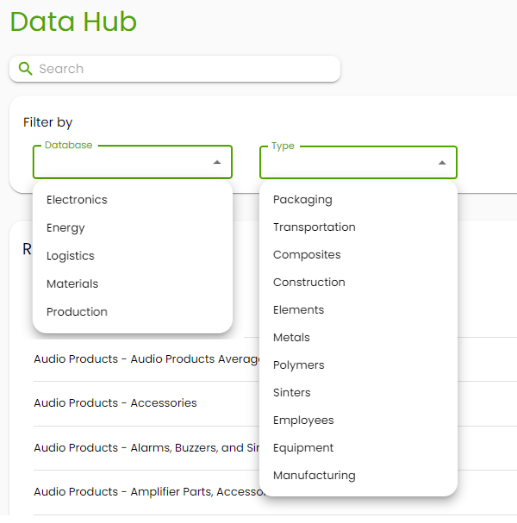
Integrate supplier inputs and secondary emission factors to build a consistent and transparent calculation model.
Step 3
The resulting PCFs enable Scope 3 reporting, hotspot identification and targeted decarbonization strategies.
Powerful Tools for
PCF Calculations

Matcher
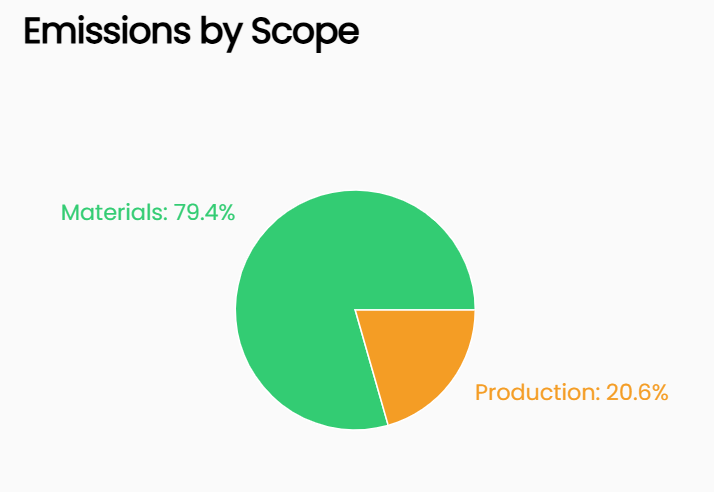
Automatically map custom BoM names to the correct entries in the PCF database using AI.

Assembler
Create ISO 14067-complianct PCFs fast, no deep LCA expertise or complex software needed.
.png)
Interpreter
Paste or upload a BoM and instantly get matched materials with CO₂ values, one-click to Assembler.

MPN Search
Enter a Manufacturer Part Number to retrieve emission factors ( kgCO₂/kg and kgCO₂/pcs).
The Role of CO₂e Data in PCF Calculation
Product Carbon Footprints are only as reliable as the emission data behind them.
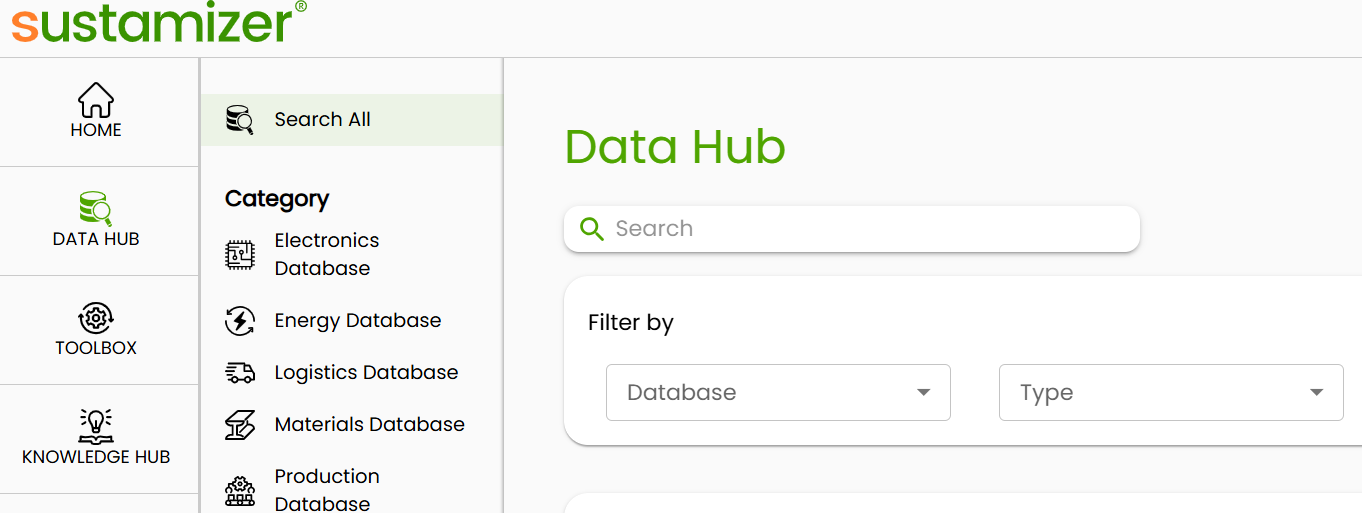
Accurate PCF calculation depends on robust and validated CO₂e emission factors. Every material, manufacturing process, energy input and logistics flow must be linked to reliable emission data to ensure consistent and standards-aligned carbon accounting.
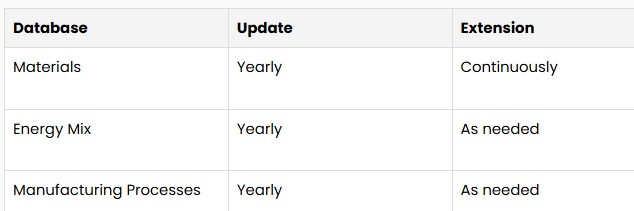
Product Carbon Footprints are not static metrics. Changes in material sourcing, supplier performance, energy mixes or updated emission factors directly impact CO₂e results.
Static databases or one-time LCA studies quickly become outdated and limit comparability over time.
Know where your emission factors come from — and how they impact your PCF results.
Companies must understand the origin, methodology and update logic behind each emission factor to ensure audit-readiness and defendable sustainability claims.
Sustamize provides structured documentation and clearly traceable CO₂e reference data, enabling consistent verification and alignment with standards such as ISO 14067 and the GHG Protocol.
Sustamize provides dynamic, regularly updated and globally consistent CO₂e reference data to ensure that PCF calculations remain accurate, scalable and future-proof.
Our high-quality emission factor database is continuously maintained and designed for portfolio-level recalculation, enabling companies to adapt to regulatory changes, supplier updates and evolving climate reporting requirements.
Built for Automated, System-Integrated PCF Calculation
Sustamize enables companies to automate Product Carbon Footprint calculations across complex product portfolios. By combining validated emission factors, integrated ERP and CAD data, and structured calculation logic, we transform carbon accounting into a scalable, repeatable and system-driven process.
Data and Tools for
Product Carbon Footprints
Understanding
Product Carbon Footprints
Everything you need to know about PCF calculation, Scope 3 emissions, verification and carbon reporting.
What is a Product Carbon Footprint (PCF)?
A Product Carbon Footprint (PCF) quantifies all life-cycle greenhouse gas emissions in kg CO₂e — from raw materials to end-of-life. Sustamize enables scalable, standards-aligned PCF calculation, providing the foundation for Scope 3 reporting, carbon benchmarking and strategic decarbonization.
How does sustamize calculate PCFs?
Sustamize applies a bottom-up modeling approach based on validated CO₂e reference data and structured calculation logic. Emissions are allocated across materials, production processes, logistics and other relevant life cycle stages, ensuring transparent and audit-ready results.
Why are PCFs important for companies?
Product Carbon Footprints (PCFs) have become a standard in carbon accounting and sustainability reporting. They enable companies to measure product-level CO₂e emissions across the entire value chain and accurately calculate Scope 3 emissions — often the largest share of a corporate carbon footprint.
By quantifying greenhouse gas emissions from raw materials to end-of-life, PCFs provide the foundation for transparent carbon reporting, regulatory compliance, and credible climate claims. More importantly, they reveal emission hotspots within products, materials, and production processes, enabling companies to redesign products, optimize material choices, and decarbonize supply chains to systematically reduce product-level emissions.
What does a PCF include?
A Product Carbon Footprint (PCF) calculated all relevant greenhouse gas emissions across the product life cycle — structured, traceable and standards-aligned.
This includes:
• Raw material production: sourcing and extraction emissions
• Manufacturing and processing: energy consumption, process emissions and waste
• Distribution and logistics: transportation and storage impacts
• Use phase: operational energy consumption
• End-of-life: disposal, recycling or reuse
Sustamize models these life-cycle stages using validated CO₂e reference data and structured calculation logic to ensure consistency and audit-readiness.
Two commonly applied system boundaries define the scope of calculation:
• Cradle-to-gate: covering emissions up to the factory gate
• Cradle-to-grave: including use phase and end-of-life
By clearly defining system boundaries and integrating primary and secondary emission data, sustamize enables comparable, decision-ready PCF results across products and portfolios.
How is a PCF calculated?
Product Carbon Footprints are calculated using Life Cycle Assessment (LCA) methodologies, ensuring structured and standards-aligned carbon accounting.
The process combines primary data from suppliers and internal operations with validated secondary data, including emission factor databases such as the sustamize CO₂ Reference Database. Energy use, materials and process inputs are systematically converted into CO₂e emissions, delivering consistent, comparable and audit-ready results.
How companies use PCFs
Product Carbon Footprints are more than reporting metrics — they are strategic management tools. With sustamize, companies transform product-level CO₂e data into actionable insights that drive both operational performance and regulatory compliance.
Internally, automated PCF calculation enables organizations to identify Scope 3 emission hotspots across materials, manufacturing processes and logistics flows. This data supports low-carbon product design, material substitution, energy optimization and informed procurement decisions based on verified supplier emissions data.
Externally, structured Product Carbon Footprints strengthen carbon reporting and regulatory readiness. PCFs support compliance with emerging frameworks such as the EU Green Claims Directive, Product Environmental Footprint (PEF) and carbon border adjustment mechanisms. At the same time, they meet growing B2B and B2C demand for transparent, verifiable product emissions data and credible climate claims.
Why is verification essential?
Unverified Product Carbon Footprints expose companies to reputational, regulatory and financial risk. In an environment of increasing scrutiny around climate claims and carbon reporting, verified PCF calculations are essential for credibility and compliance.
With sustamize, structured documentation and standards-aligned methodologies provide a strong foundation for third-party verification. Verified Product Carbon Footprints strengthen stakeholder trust by enabling transparent communication with customers, investors and regulators. They also ensure data accuracy and completeness, reducing inconsistencies and aligning calculations with recognized frameworks such as ISO 14067.
Beyond compliance, verified PCFs create measurable market advantage. Companies can substantiate sustainability claims, respond confidently to buyer requirements and differentiate themselves through credible, data-backed carbon transparency.
What makes sustamize’s CO₂e data unique?
Sustamize provides high-quality, globally consistent CO₂e data that is updated twice a year and built with an API-first approach. Our databases are designed to avoid data gaps, ensuring complete coverage across regions, materials, and processes. This enables reliable, scalable, and up-to-date carbon footprint calculations for enterprise use.
Turn Emission Data into Action
Access reliable CO₂e data to calculate, manage, and scale Product Carbon Footprints across your value chain.


©2026 sustamize | Terms & Conditions | Privacy Policy | Imprint.