
Carbon-Aware
Cost Engineering
Evaluate cost and carbon impact simultaneously to support smarter design, sourcing and product decisions.
Manufacturers increasingly need to evaluate the carbon footprint of components, materials and supply chains alongside traditional cost metrics.

Where Cost Engineering Meets Carbon Complexity

No Carbon Data at Component Level
Cost models often include detailed material and process cost structures but lack reliable emissions data.

Late-Stage Carbon Insights
Sustainability teams often calculate Product Carbon Footprints after design decisions are already made.

Manual PCF Calculations
Carbon analysis often requires separate tools or manual calculations outside cost engineering workflows.

Comparing Supplier Carbon
Procurement decisions require clear trade-offs between price, emissions and supply chain risks.
Sustamize Solution for Cost Engineering Teams
Carbon-aware cost engineering enables smarter product development.
By integrating carbon data into cost engineering workflows, teams gain the ability to systematically evaluate trade-offs between cost efficiency and environmental impact.
This allows for more transparent and data-driven comparisons across suppliers, materials, and manufacturing processes.
Integrate carbon insights into product development to design lower-emission products from the start.
Sustamize enables teams to evaluate design choices and reduce product carbon footprints early in the development process.

Access emissions data for materials, manufacturing processes, energy inputs and transportation. This allows cost models to include both cost per component and carbon per component.
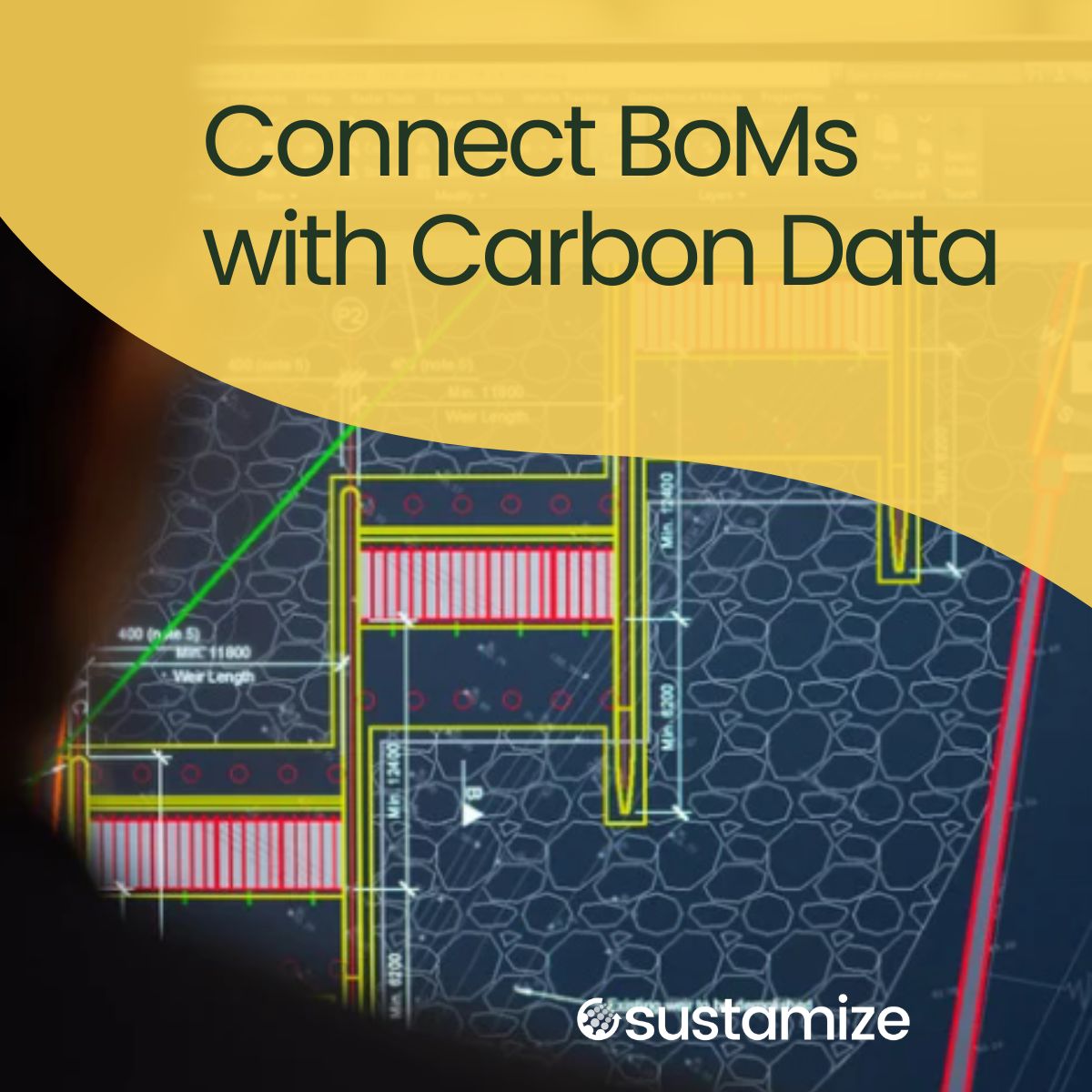
Automatically map Bills of Materials, material specifications and process steps to corresponding emissions factors, enabling product-level carbon insights directly within cost engineering workflows.

Explore Other Industry Solutions
Frequently Asked Questions for
Cost Engineers
Learn how cost engineering teams can integrate carbon data, PCFs, and Scope 3 insights into product development.
Why do cost engineers need carbon data in addition to cost data?
Cost engineers increasingly need to evaluate both financial and environmental performance when analyzing products and components. Integrating carbon data allows teams to assess the Product Carbon Footprint (PCF) of materials, processes and suppliers alongside traditional cost calculations.
What is a Product Carbon Footprint (PCF) in cost engineering?
A Product Carbon Footprint (PCF) measures the greenhouse gas emissions associated with the materials, manufacturing processes, and transportation required to produce a product. For cost engineers, PCF insights help identify how design choices, material selection, and sourcing decisions influence both manufacturing costs and emissions.
How can cost engineers compare suppliers by cost and carbon impact?
By combining cost data with emissions data for materials, processes and logistics, cost engineers can evaluate suppliers based on both price and carbon intensity. This enables more informed sourcing decisions and helps identify low-carbon supply chain alternatives.
Why is Scope 3 data important for cost engineering teams?
Scope 3 emissions typically represent 70–90% of a product’s total emissions, particularly in manufacturing industries. These emissions are mainly linked to purchased materials, upstream production processes and logistics, which are key areas analyzed by cost engineering teams.
How can carbon data support eco-design in product development?
When carbon insights are available early in the product development process, cost engineers can evaluate alternative materials, manufacturing methods or suppliers that reduce emissions while maintaining cost targets.
How do cost engineers access CO₂e data for their analyses?
Cost engineers can access sustamize CO₂e reference data either directly through the sustamize platform or via integrations with cost engineering and product development software. Through standardized APIs and software integrations, carbon data can be embedded directly into existing cost calculation workflows, allowing engineers to evaluate both manufacturing costs and emissions when comparing materials, processes, or sourcing options.
How does sustamize help cost engineers integrate carbon data into cost models?
Sustamize provides reliable CO₂e reference data for materials, manufacturing processes and logistics. This data can be connected to Bills of Materials and cost structures, enabling cost engineers to calculate cost and carbon impact simultaneously.
Can cost engineering tools support regulatory requirements such as CSRD or ESPR?
Yes. Carbon-aware cost engineering helps companies prepare product data required for regulatory frameworks such as CSRD, ESPR and Digital Product Passports, ensuring products are designed with both compliance and sustainability in mind.
Turn Emission Data into Action
Access reliable CO₂e data to calculate, manage, and scale Product Carbon Footprints across your value chain.

©2026 sustamize | Terms & Conditions | Privacy Policy | Imprint.