
Enzyme recycling
Why Plastic Recycling Needs New Solutions
The current ecological context calls on companies, organizations and governments to limit plastic pollution, as formulated by the UN Environment Programme with #BeatPlasticPollution. Enzyme recycling could solve this problem in the future.
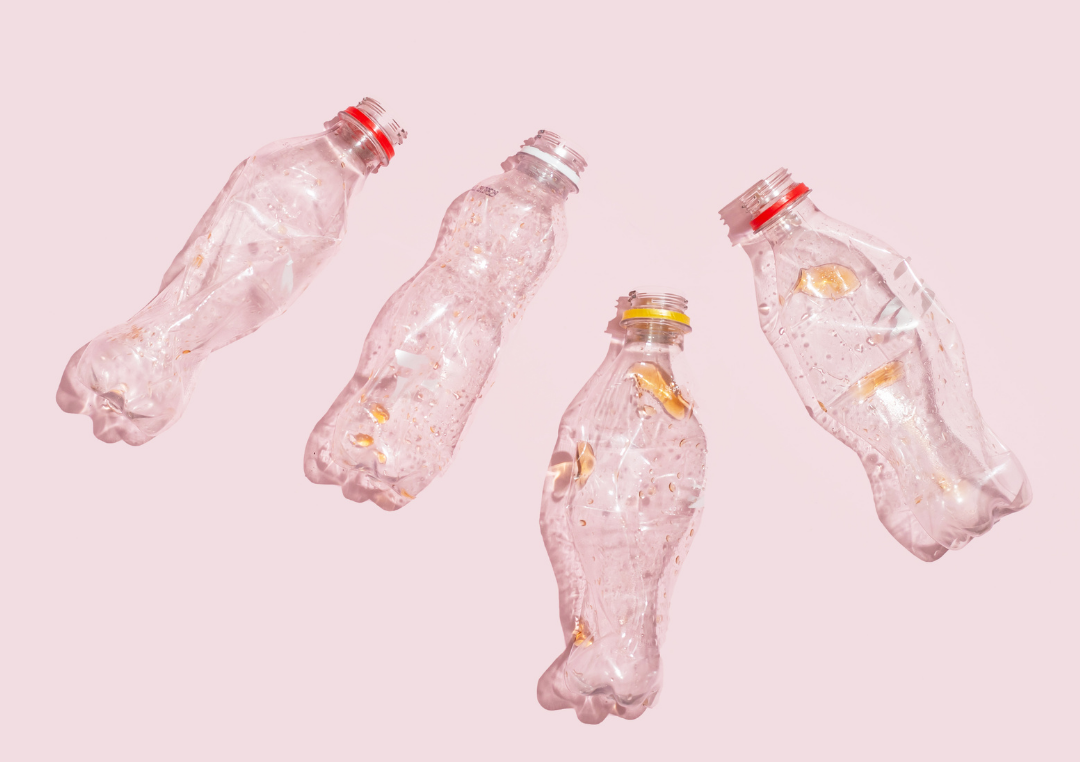
The issue of plastic recycling is crucial to reducing plastic pollution. But plastics are unfortunately often difficult and sometimes impossible to recycle ( for instance because of color, complex packaging compositions, high costs, lack of infrastructure, etc.). The bottom line is that only light-colored plastic can be recycled in the form of colored plastic, which degrades the quality of each cycle and makes it difficult to get new products made from 100% recycled polyethylene terephthalate ("PET").
Enzyme Recycling: A Promising Solution for Plastic Waste
Japanese researchers discovered the enzymes when they found a bacterium that "eats" plastic. The enzyme produced can break down plastic into its original components. Called enzyme biocatalysis, it depolymerizes plastic substrates into oligomers and monomers that can be recovered as raw materials for making new plastic products or synthesizing other value-added chemicals. By further studying this enzyme, researchers around the world, such as the Centre for Enzyme Innovation at the University of Portsmouth, UK, have discovered other enzymes that degrade plastics even more efficiently.
The Environmental Benefits of Enzymatic PET Recycling
In their 2021 study, researchers Singh et al. found that using enzymes is a more sustainable approach to recycling PET, the common plastic in single-use beverage bottles, clothing and food packaging that has become a real challenge to combat plastic pollution.
According to the U.S. National Renewable Energy Laboratory, the bioinspired recycling process can reduce the environmental impact of plastics by up to 95% while creating up to 45% more socioeconomic benefits, including local jobs at materials recovery facilities.
The study also predicts that enzymatic PET recycling can be cost-competitive with virgin PET manufacturing, highlighting the potential of this enzyme technology to decarbonize PET manufacturing and also enable recycling of PET-rich waste materials such as clothing and carpet.
Several companies, such as the French company CARBIOS, have started to bet on this innovation and develop industrial processes for it.
The Role of Enzyme Recycling in the Circular Economy
At sustamize, we are curious about the further development of this technology, which can actively contribute to the transition to a circular economy. We also look forward to including this recycling method in our CO2 footprint calculations in the future, once it becomes mainstream. In the meantime, we recommend reading the scientific papers below to learn more about this exciting innovation.
Why Carbon Footprint Data Will Be Essential
Reliable Product Carbon Footprint calculations will be needed to compare enzymatic recycling with mechanical recycling, chemical recycling, incineration, and virgin PET production.
Transparent CO₂e data can help companies evaluate:
- how much energy the process requires
- which emissions are avoided
- how the recycled material compares with virgin PET
- whether the technology delivers net climate benefits
- where further process improvements are needed
At sustamize, we are closely following the development of enzyme recycling and its potential contribution to a more circular plastics industry. As the technology becomes commercially established, verified data could be incorporated into future carbon footprint calculations to support transparent comparisons and better material decisions.
Sources
Tournier, V., Topham, C. M., Gilles, A., David, B., Folgoas, C., Moya-Leclair, E., Kamionka, E., Desrousseaux, M.-L. ., Texier, H., Gavalda, S., Cot, M., Guémard, E., Dalibey, M., Nomme, J., Cioci, G., Barbe, S., Chateau, M., André, I., Duquesne, S., & Marty, A. (2020). An engineered PET depolymerase to break down and recycle plastic bottles. Nature, 580(7802), 216–219. https://doi.org/10.1038/s41586-020-2149-4
Singh, A., Rorrer, N. A., Nicholson, S. R., Erickson, E., DesVeaux, J. S., Avelino, A. F. T., Lamers, P., Bhatt, A., Zhang, Y., Avery, G., Tao, L., Pickford, A. R., Carpenter, A. C., McGeehan, J. E., & Beckham, G. T. (2021). Techno-economic, life-cycle, and socioeconomic impact analysis of enzymatic recycling of poly(ethylene terephthalate). Joule, 5(9), 2479–2503. https://doi.org/10.1016/j.joule.2021.06.015
Zhu, B., Wang, D., & Wei, N. (2021). Enzyme Discovery and Engineering for Sustainable Plastic Recycling. Trends in Biotechnology. https://doi.org/10.1016/j.tibtech.2021.02.008

14 Tage kostenlos testen
Entdecke unsere Emissionsdatenbank, KI-gestützten Tools und Lösungen für die Erstellung von Product Carbon Footprints.

.png)
Emissionen senken,
Kosten optimieren
CO₂e-Daten nutzen, um Product Carbon Footprints entlang der Wertschöpfungskette effizient zu berechnen und zu optimieren.

©2026 sustamize | AGB | Datenschutz | Impressum.