
How can I improve the accuracy of my sustainability reporting?
Sustamize ensures accurate sustainability reporting with verified, updated CO₂ data, automated PCF tools, and a certified Carbon Data Platform
How to Improve Sustainability Reporting Accuracy with Better Carbon Data
Accurate sustainability reporting starts with reliable, transparent and up-to-date carbon data. High-quality emission factors, consistent methodologies and detailed activity data form the basis for credible Product Carbon Footprints (PCFs), Scope 3 emissions calculations and other carbon reporting activities.
Use high-quality and up-to-date emission factors
Emission factors translate activity data such as material quantities, energy consumption or transport distances into CO₂e values. The quality of these factors therefore has a direct impact on the accuracy of carbon calculations.
Using a reliable PCF database with transparent, regularly updated and well-documented emission factors helps reduce uncertainty and improves comparability across products and reporting periods.
The sustamize CO₂e Database provides comprehensive reference data for materials, electronics, energy, logistics, manufacturing processes and other emission sources. It is designed to support scalable PCF and Scope 3 calculations with consistent and traceable data.
Combine primary and secondary data
Accurate reporting usually requires a combination of company-specific information and reliable reference data.
Primary data and secondary data serve different purposes. Primary data can include supplier-specific emissions, actual energy consumption or manufacturing data, while secondary data helps fill gaps where direct information is unavailable.
Combining both data types enables companies to improve data coverage without leaving significant gaps in their carbon calculations.
Improve the quality of product and activity data
The more granular the underlying activity data, the more accurately emissions can usually be calculated. Relevant inputs can include:
- material types and quantities
- production processes
- electricity and fuel consumption
- transportation distances
- recycled content
- product use
- end-of-life scenarios
For product-level assessments, these inputs are combined with emission factors to calculate a Product Carbon Footprint across the relevant lifecycle stages.
Companies looking for a practical overview can also explore the key steps in calculating a Product Carbon Footprint and the data required for accurate PCF assessment.
Apply consistent lifecycle boundaries and methodologies
Reliable sustainability reporting also depends on clearly defined system boundaries and consistent calculation methodologies.
A Life Cycle Assessment (LCA) provides the methodological foundation for assessing environmental impacts across a product lifecycle, while a PCF focuses specifically on greenhouse gas emissions.
Companies should clearly document whether calculations follow boundaries such as cradle-to-gate or cradle-to-grave and apply the same methodological principles across comparable products.
Recognized standards are also important for consistency. Learn more about standards that guide PCF calculations, including ISO 14067 and the GHG Protocol.
Standardize Product Carbon Footprint calculations
Standardized calculation workflows help ensure that carbon results remain comparable across products, locations and reporting periods.
The sustamize PCF calculation solution combines validated emission factors, structured calculation logic and product data to support repeatable and scalable PCF calculations. This becomes especially relevant when organizations need to calculate footprints across large product portfolios rather than individual products.
Automate data mapping and carbon calculations
Manual data preparation, spreadsheet calculations and individual emission-factor searches can introduce inconsistencies and increase the risk of human error.
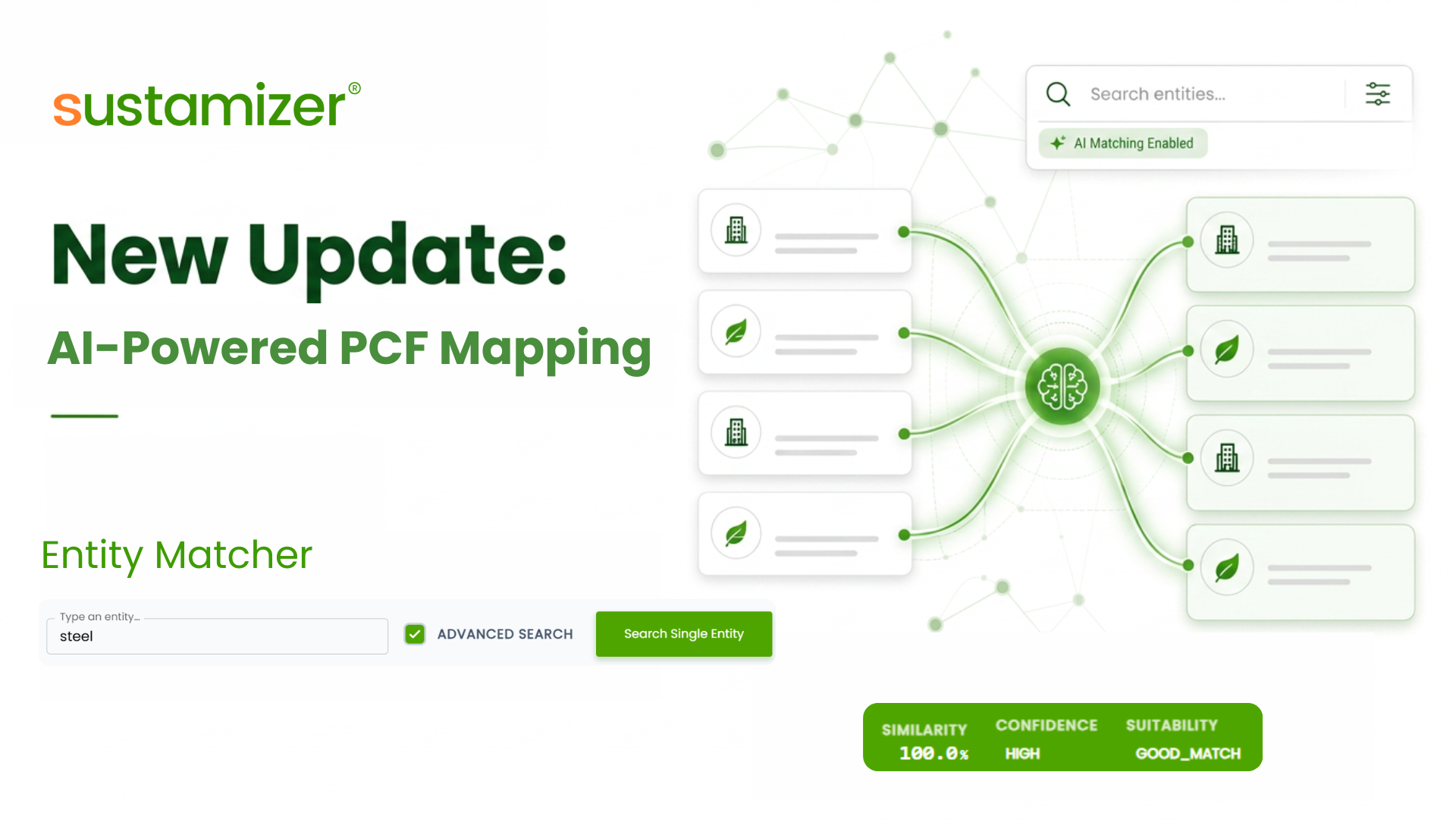
The sustamizer® combines CO₂e reference databases with tools for data processing, BoM mapping and automated PCF generation. Companies can therefore move from raw product data to structured carbon calculations more efficiently while maintaining consistent calculation logic. For more background, see the dedicated Glossary entry explaining the sustamizer®.
Integrate carbon data into existing systems
Accuracy can also improve when carbon data is integrated directly into existing ERP, PLM, procurement or sustainability systems instead of being transferred manually between spreadsheets and tools.
A Carbon Data API enables organizations to access emission factors and calculation logic programmatically.
With the sustamize API, companies can integrate standardized CO₂e reference data and automated PCF calculations directly into their existing software environments and workflows.
Improve Scope 3 reporting with product-level data
For many companies, a significant share of their carbon footprint occurs in the value chain. Reliable Scope 3 emissions reporting therefore depends on detailed information about materials, suppliers, manufacturing processes, logistics and product use.
Product-level carbon data can provide more granular insights than high-level spend-based estimates and make it easier to identify emissions hotspots and reduction opportunities.
Focus on transparency and traceability
Ultimately, improving sustainability reporting accuracy requires more than collecting additional data.
Companies need:
- reliable and regularly updated emission factors
- high-quality primary and secondary data
- consistent lifecycle boundaries
- transparent calculation methodologies
- standardized PCF workflows
- traceable data sources and assumptions
- scalable tools and system integrations
By combining these elements, organizations can create carbon data that is more consistent, transparent and suitable for sustainability reporting, Product Carbon Footprint calculation and Scope 3 management.

Data and Tools for
Product Carbon Footprints
Insights, Updates & Industry News
Latest news, insights, and updates on carbon data, regulation, and sustainability.

Turn Emission Data into Action
Access reliable CO₂e data to calculate, manage, and scale Product Carbon Footprints across your value chain.